Is Biomass Really Carbon-Neutral? The Science — and Where the Claim Breaks Down
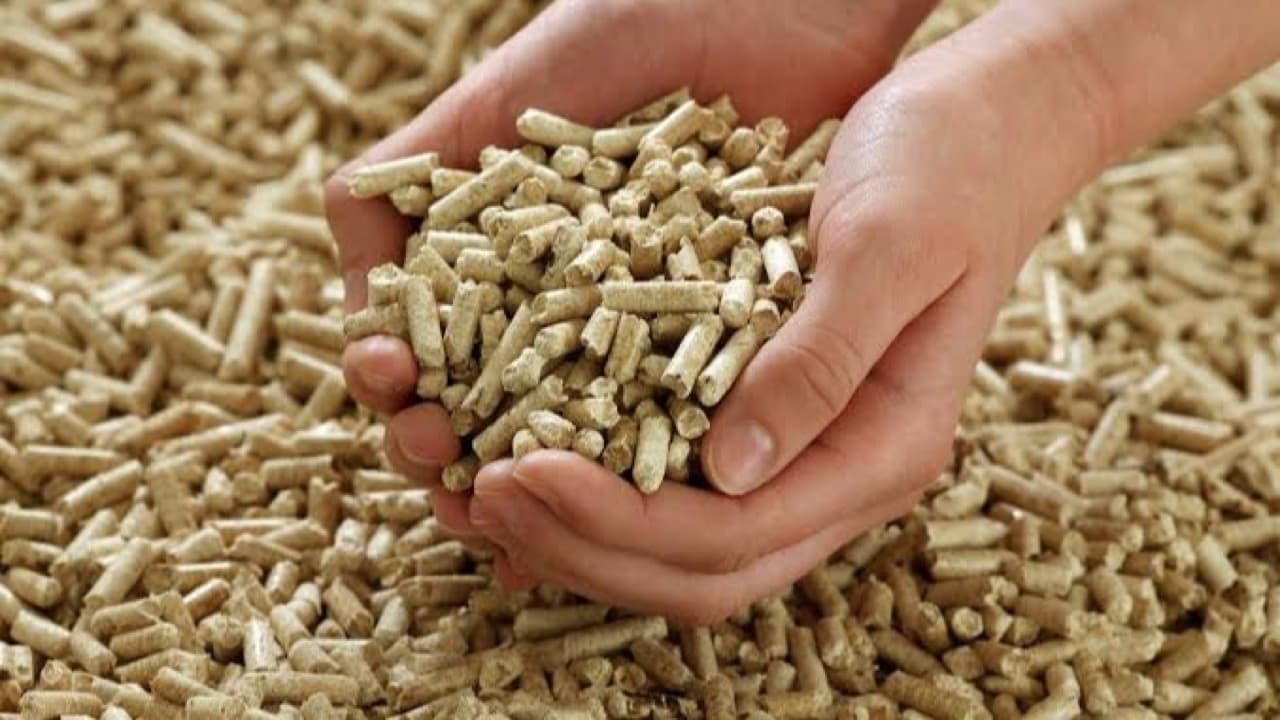
"Biomass is carbon-neutral" is one of the most repeated lines in the energy-transition conversation, and it is also one of the most frequently oversimplified. The underlying logic is sound. But the leap from "the logic is sound" to "therefore this specific plant, pellet mill, or briquetting unit is carbon-neutral" is exactly where a lot of biomass projects get their carbon story wrong — and where lenders, offtakers, and regulators have started asking sharper questions. This post walks through how the carbon-neutral claim actually works, the conditions under which it breaks down, and what that means in practice for anyone in India's biomass-energy value chain.
The core idea: a closed carbon loop
Every plant grows by pulling CO2 out of the atmosphere through photosynthesis and locking that carbon into its stems, leaves, husks, and stalks. When that plant material is later burned — whether as firewood, agricultural residue in a boiler, or processed pellets — the combustion process releases the carbon back into the atmosphere as CO2.
The carbon-neutral argument rests on a simple accounting idea: if the carbon released in combustion is roughly equal to the carbon that was absorbed during the plant's growth, and a new generation of plants is grown to replace what was burned, then burning biomass does not add new carbon to the atmosphere. It recirculates carbon that was already part of the active biological cycle.
This is the fundamental distinction from fossil fuels. Coal, oil, and natural gas are also, originally, biomass — but biomass that was locked underground for millions of years, outside the active carbon cycle. Burning fossil fuels releases carbon that had been geologically sequestered and would otherwise have stayed out of circulation. Burning biomass releases carbon that was going to cycle back into the atmosphere anyway, whether through combustion or through natural decomposition.
| Fossil fuels | Biomass | |
|---|---|---|
| Carbon source | Geological reserves, sequestered for millions of years | Atmospheric CO2, absorbed during recent plant growth |
| Effect of combustion | Adds new carbon to the active atmospheric cycle | Recirculates carbon already in the active cycle |
| Natural fate if not burned | Stays locked underground indefinitely | Eventually decomposes and releases CO2 anyway |
| Net atmospheric effect (idealised) | Net addition — the basis of fossil-fuel emissions accounting | Net neutral, if regrowth replaces what's burned |
Where the clean story gets complicated
The idealised version assumes three things happen automatically: replacement biomass is grown, that growth happens fast enough to matter, and nothing outside the plant-CO2 loop adds emissions along the way. In practice, each of those assumptions can fail — and each failure is worth understanding on its own terms.
1. The carbon-debt timing problem. Carbon-neutrality accounting compares two moments — the CO2 released at combustion and the CO2 absorbed during growth — but those moments are rarely simultaneous. If a tree takes 30 years to reach the size it was when harvested, the atmosphere carries that carbon as a net addition for the better part of those 30 years, even though the long-run accounting eventually balances. This is called carbon debt, and the length of the payback period is the single biggest variable in how defensible a carbon-neutral claim really is. Annual crops are the favourable case here — a paddy or wheat crop regrows within a single season, so the payback period for straw or stubble is close to zero. Slow-growing forestry biomass is the unfavourable case, with payback periods that can run to decades.
2. Land-use change. If land that would otherwise remain forest, grassland, or another carbon-storing use is converted specifically to grow biomass feedstock — or if natural forest is harvested faster than it regenerates — the accounting can turn net-positive for emissions even while the combustion-regrowth loop looks balanced on paper. This is a bigger risk for dedicated energy-crop plantations and wood-pellet supply chains than for agricultural residue, which is a byproduct of food-crop land already in production.
3. Processing and logistics emissions. Growing the feedstock is only the biological half of the story. Collection, drying, densification (pelleting or briquetting), and transport to the point of combustion all typically run on diesel, grid electricity, or process heat — none of which is carbon-free by default. A biomass supply chain with a long collection radius and heavy mechanical processing can carry a meaningful fossil-fuel footprint even though the fuel itself is biogenic.
4. The counterfactual question. Carbon-neutral compared to what? If the alternative to burning a given batch of crop residue is open-field stubble burning — which happens across large parts of India every rabi and kharif season regardless — then routing that same residue through a biomass power plant or briquetting unit displaces an emission that was going to happen anyway, and captures useful energy in the process. That is a materially different, and stronger, case than comparing biomass combustion to a hypothetical scenario where the residue is left to decompose slowly and re-enter the soil.
Why this matters for India's agri-residue economy specifically
India's biomass story is unusually favourable on the carbon-debt question, precisely because so much of the feedstock in play is annual crop residue rather than wood. Paddy straw, wheat stubble, sugarcane bagasse and trash, cotton stalk, mustard husk, and rice husk are all byproducts of crops that regrow on an annual cycle. That collapses the carbon-debt payback period from years or decades down to a matter of months — the strongest version of the carbon-neutral case that biomass can make.
It also collides with one of India's most visible seasonal environmental problems. Government estimates have long put total crop-residue generation in the hundreds of millions of tonnes annually, with a meaningful surplus — residue not needed for fodder, mulching, or soil incorporation — going unused or openly burned in fields across the northern plains each season. Open burning releases the same CO2 with none of the energy captured, plus significant local air-quality damage. Routing that surplus into biomass power, pelletisation, briquetting, or compressed biogas (CBG) under schemes like the National Bioenergy Programme and SATAT is, in carbon terms, close to a free win: the CO2 accounting is similar to what open burning would produce anyway, but the energy is captured and the local pollution profile is generally better managed in a controlled combustion or anaerobic-digestion process than in an open field.
This is also why agri-residue-based projects generally have a cleaner carbon story than dedicated energy-crop plantations or imported wood-pellet supply chains — the feedstock is a byproduct of food-crop land already in production, not new land brought under biomass cultivation, which sidesteps the land-use-change risk entirely.
What this means if you're building or financing a biomass project
For a developer, lender, or offtaker evaluating a biomass power, pelletisation, briquetting, or CBG project in India, "carbon-neutral" is a claim to test, not a label to accept. The practical questions that separate a defensible claim from marketing language are consistent across feedstocks:
- What is the feedstock, specifically? Annual crop residue carries a near-zero carbon-debt payback period. Wood or dedicated energy crops do not — and the difference matters to anyone underwriting the project's climate credentials.
- What is the sourcing radius and supply commitment? A collection radius that depends on trucking feedstock long distances, or a supply agreement that is not firm, both weaken the carbon case and the commercial one — often for the same underlying reason.
- What powers the processing? Drying, densification, and handling that run on diesel or unclean grid power eat into the net carbon benefit. This is worth quantifying, not assuming away.
- What is the honest counterfactual? A project displacing open-field burning has a different, stronger story than one competing with residue that would otherwise be incorporated back into the soil as organic matter — a genuine agronomic use with its own value.
- Does the load factor imply demand beyond sustainable local supply? A plant whose economics only work by drawing residue from an ever-expanding radius, or by outbidding fodder and soil-health uses, is quietly borrowing against a claim it can't keep making.
None of this makes biomass a weak option — for India's agri-residue base specifically, it is one of the more genuinely defensible low-carbon energy pathways available, precisely because the feedstock's short regrowth cycle does most of the heavy lifting. But "defensible" is a claim that has to be built into the project's feedstock strategy and supply-chain design from day one, not asserted after the fact when a lender or auditor asks for it.
If you're structuring or financing a biomass energy project — power generation, pelletisation, briquetting, or compressed biogas — and need the feedstock, sourcing, and process-energy assumptions stress-tested before they go into a lender's or investor's model, that is precisely the kind of technical and commercial due diligence a bank-format TEV study is designed to catch early. It's also worth reading alongside our related piece on how bamboo carbon credits actually work in India, which covers the same "claim versus verified reality" gap from the credits side of the carbon conversation.
Explore feasibility & TEV studies →Quick answers.
- Because the CO2 released when biomass is burned was captured from the atmosphere by the plant during its growth, through photosynthesis. In a steady-state system — where new plants are grown to replace the ones burned — the carbon released by combustion is offset by the carbon absorbed by regrowth, so there is no net addition of new carbon to the atmosphere, unlike burning fossil fuels that release carbon locked away for millions of years.
- Not exactly, and not automatically. The combustion-regrowth balance is a simplification that assumes instant, complete replacement of the biomass burned, no land-use change, and no fossil energy used to grow, collect, process, or transport it. Real projects carry a temporary 'carbon debt' during the regrowth period, and processing and logistics emissions, so biomass is better described as low-carbon or near-neutral rather than perfectly neutral — the size of the gap depends entirely on the specific feedstock and supply chain.
- Yes, and favourably so. Annual crop residues like paddy straw, cotton stalk, and sugarcane trash regrow within months, so the 'carbon debt' payback period is close to zero — the next season's crop reabsorbs the carbon almost immediately. Wood biomass from slow-growing trees can carry a payback period of years to decades, which is why agri-residue-based bioenergy has a stronger carbon-neutrality case than most forestry-biomass pathways.
- It counts as low-carbon relative to coal or diesel, but 'carbon-neutral' is not the same as 'zero emissions' or 'zero pollution.' Combustion still releases particulate matter and other local air pollutants, and open-field stubble burning — as opposed to controlled combustion in a biomass power plant or briquetting unit — captures none of the energy value while still emitting. The carbon-neutrality argument applies to CO2 accounting, not to local air quality.
- Lenders and investors increasingly expect the carbon-neutrality claim to be substantiated, not asserted — with a defined feedstock radius, a credible supply agreement, and a load factor that does not quietly depend on burning more biomass than the local agri-residue base can sustainably supply. That substantiation is exactly the kind of technical and commercial due diligence a bank-format TEV study is built to test.

Devendra K Jha· Director, AgPro Consulting
Founding Director of AgPro Consulting. Agricultural engineer with 28+ years across agri inputs, mechanization, and enterprise leadership roles.
LinkedInRelated insights
Smallholder Farmers: Small in Scale, Enormous in Impact
Almost 9 out of 10 farmers in India own less than 2 hectares of land. Yet together, these small farms grow most of the food the country eats. This is a simple, plain-language look at why India's smallholder farmers matter so much — and why farming small is harder than it sounds.
Regenerative Agriculture in India: Farmers Don't Sell Soil Health, They Sell Food
Regenerative and natural farming are gaining ground across India, but the pitch built for policymakers and investors — soil carbon, biodiversity, ecosystem services — is not the pitch that sells a vegetable. Here's why the language has to change, and what actually works with Indian consumers.
State-Wise Cropping Patterns: What Changed in India's Foodgrain Map in 2024-25
Uttar Pradesh retook the rice leader position in 2024-25 after Telangana led in 2023-24. The wheat map held, but the within-state mix shifted. This piece walks the state-level production numbers — and what they mean for anyone planning agri-input demand or supply-chain flows in 2026.