Regenerative Agriculture in India: Farmers Don't Sell Soil Health, They Sell Food
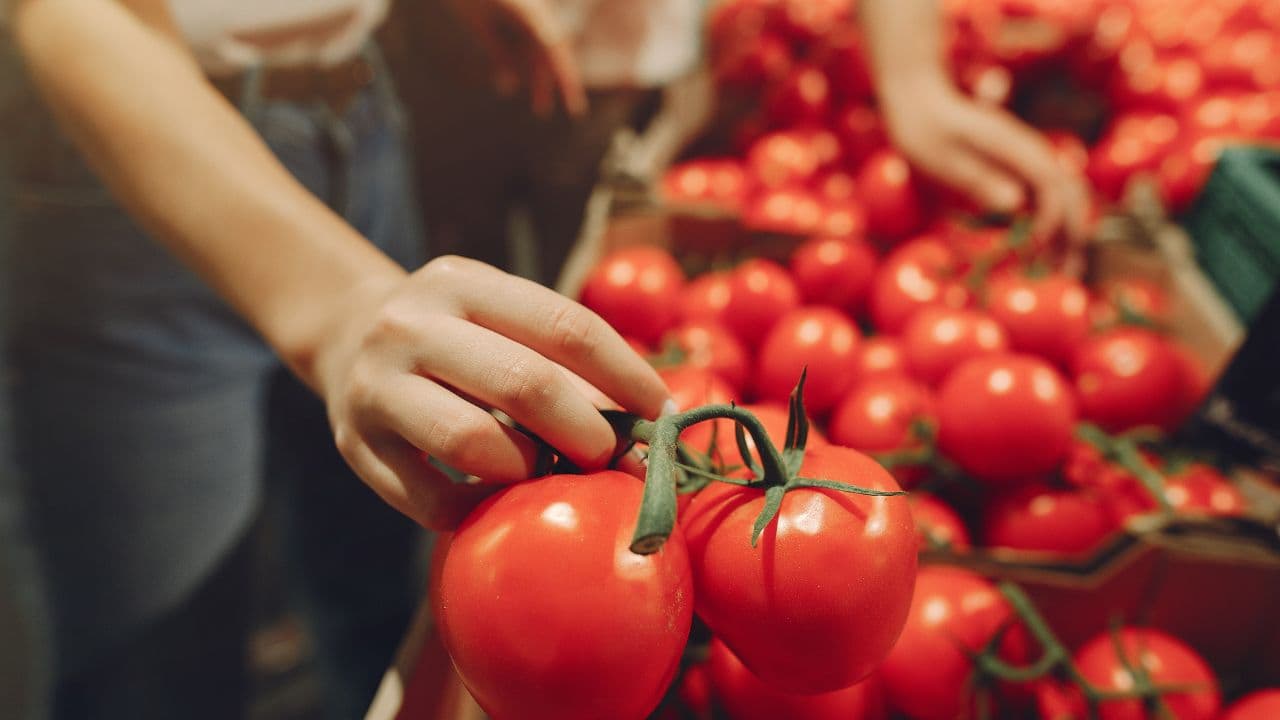
A farmer in Andhra Pradesh stops using chemical fertiliser and switches to natural farming. A few months later, a woman in Bengaluru is standing at a weekend market, looking at his tomatoes. What makes her pick them up and pay for them?
It is not soil health. It is not carbon. It is not "regenerative agriculture." She picks them up because they look fresh, because she thinks they will taste better, or because she trusts the person selling them. That is the whole decision.
I think about this a lot in my work with farmers and agri-businesses across India. We talk endlessly about soil restoration, sustainability, and regenerative practices — in reports, in policy documents, in conferences. But the person buying vegetables in a market or a supermarket is not thinking about any of that. And if we don't understand this gap, regenerative agriculture in India will stay a nice idea that never really reaches ordinary buyers.
What Indian consumers actually care about
Ask any shopper in an Indian city what worries them about their food, and you will not hear the words "soil organic carbon" or "biodiversity." You will hear: too many pesticides, milk and spices that are adulterated, "organic" labels nobody fully trusts, fruit that is artificially ripened. People sense that something is wrong with how food is grown, even if they can't explain the science of it.
This is exactly where regenerative and natural farming has an opening — and exactly where it can be wasted.
"Natural farming" sounds trustworthy to an Indian ear immediately, because it reminds people of something real: a grandmother's kitchen garden, a village where nobody used chemical sprays, food that didn't need a certificate because you could see how it was grown with your own eyes. That memory is valuable. It is honestly one of the biggest advantages Indian agriculture has that many other markets don't.
But the moment we start talking about carbon credits, soil microbiology, or "ecosystem services" — language made for policymakers and investors — the ordinary buyer switches off. Nobody in a mandi buys a kilo of brinjal because it improved soil carbon by a small percentage. That language belongs in a subsidy application, not on a shelf.
Old practices, new tools — that is the real Indian story
The most convincing version of this story in India is not "let's go back to how our grandparents farmed." Farmers cannot survive on nostalgia. What works is old wisdom combined with new tools: cow-based natural inputs like jeevamrutham and beejamrutham, alongside soil testing, WhatsApp-based farm advisory, drone spraying for bio-inputs, and QR codes that let a buyer trace where their food actually came from.
The traditional practice is the foundation. The modern tool is what makes a buyer in Bengaluru or Pune actually believe it and pay for it. A farmer on one and a half acres still needs machinery suited to a small Indian farm, and inputs that are properly tested — not just "traditional" by name, with no proof behind the claim.
"Food security" does not sell in the market
I have noticed that when we frame natural farming around national food security or self-reliance, it barely moves anyone to buy. People agree it matters. They also feel it is the government's job, or industry's job — not something they personally need to think about while shopping. What actually moves a buying decision is simpler: does it taste better, is it safe, can I afford it, do I trust who's selling it to me. That is true everywhere, not just in India.
Farmers must not be left out of the price they earn
That is not something India can build a movement on. The median Indian farm is under two hectares. A claim of "regenerative" without a clear standard, independent verification, and an honest explanation for its price is not a farming movement — it becomes just another marketing label, the same way "organic" has already lost trust at many local stores.
Speak in the language of food, not farming theory
If there is one thing I want every farmer producer group, agri-startup, and cooperative in India to remember, it is this: don't sell the theory, sell the food.
Not "this rice restores soil organic carbon" — but "this rice tastes like what my grandmother used to cook, grown by a farmer I know, without the chemicals that give me a headache at the mandi." Not a pitch built for a corporate sustainability report, but one built for the person actually filling their plate at home.
Old wisdom and new tools don't need to compete with each other in Indian farming. They can support each other. But only if what finally reaches the consumer is good food — not a philosophy about how it was grown.
Where AgPro fits
Positioning regenerative and natural-farming products for the Indian market is a market-intelligence problem as much as an agronomic one — understanding what a specific buyer segment will actually pay for, and why, before a brand, an FPO, or an agri-input company commits to a go-to-market story.
Explore our agri-intelligence & analytics practice →Quick answers.
- In India, regenerative agriculture is usually practised under names like Zero Budget Natural Farming or the Andhra Pradesh Community-managed Natural Farming programme (APCNF) — approaches built around cow-based natural inputs, composting, crop diversity, and reduced or eliminated synthetic fertiliser and pesticide use, often echoing pre-Green-Revolution farming practices.
- Because that language is built for policymakers, investors, and sustainability reports, not for someone deciding what to buy at a market or a store. Indian consumers, like consumers everywhere, make buying decisions on taste, safety, price, and trust in the seller — not on soil organic carbon percentages or ecosystem-service claims.
- A combination of traditional credibility and modern proof: language that evokes a grandmother's kitchen garden or chemical-free village farming, backed by concrete, verifiable signals — soil test data, traceability QR codes, a named farmer — rather than jargon aimed at experts.
- Because in India, organic and regenerative price premiums are frequently captured by exporters, certifying agencies, and urban retailers rather than the smallholder who absorbed the yield dip and cost of transitioning away from chemical inputs. Without a recognised standard and transparent pricing logic, regenerative risks becoming a boutique shelf category rather than a viable model for India's mostly sub-two-hectare farms.

Devendra K Jha· Director, AgPro Consulting
Founding Director of AgPro Consulting. Agricultural engineer with 28+ years across agri inputs, mechanization, and enterprise leadership roles.
LinkedInRelated insights
Smallholder Farmers: Small in Scale, Enormous in Impact
Almost 9 out of 10 farmers in India own less than 2 hectares of land. Yet together, these small farms grow most of the food the country eats. This is a simple, plain-language look at why India's smallholder farmers matter so much — and why farming small is harder than it sounds.
Is Biomass Really Carbon-Neutral? The Science — and Where the Claim Breaks Down
Biomass is called carbon-neutral because the CO2 released when it burns was pulled out of the atmosphere by the plant while it grew — in principle, a closed loop. That loop only holds under specific conditions, and for anyone building or financing a biomass energy project in India, the gap between the textbook claim and the bankable reality is where the real work sits.
State-Wise Cropping Patterns: What Changed in India's Foodgrain Map in 2024-25
Uttar Pradesh retook the rice leader position in 2024-25 after Telangana led in 2023-24. The wheat map held, but the within-state mix shifted. This piece walks the state-level production numbers — and what they mean for anyone planning agri-input demand or supply-chain flows in 2026.