FMTTI Testing of Power Tillers, Power Weeders and Power Reapers: A Practical Guide
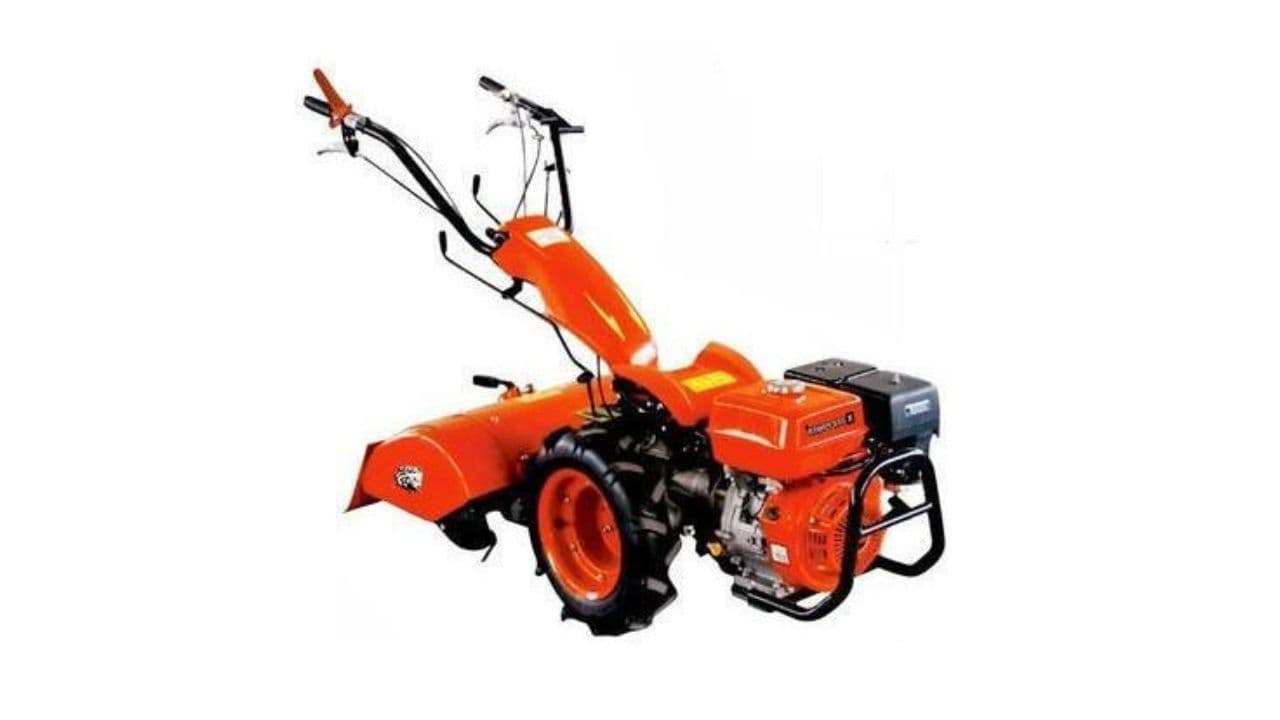
Power tillers, power weeders, and power reapers are the machines that actually reach India's small and marginal farms — the segment that makes up the overwhelming majority of the country's operational holdings. Unlike tractors, most of them never touch a CMVR type-approval process at all. Their gate is a different one: performance testing at an FMTTI centre under the Ministry of Agriculture & Farmers Welfare.
Manufacturers who have already run a tractor or on-road vehicle through ARAI or ICAT sometimes assume the same playbook applies here. It doesn't, entirely. This guide covers what FMTTI actually tests for each of these three machine categories, which standard applies to which, and where OEMs lose the most calendar time on a first programme.
Why these three machines sit outside the CMVR world
A tractor gets registered, plated, and driven on a public road, so it falls under the Central Motor Vehicles Rules and routes through ARAI or ICAT for type-approval, with FMTTI running the PTO and drawbar performance track alongside it.
Power tillers, power weeders, and power reapers are different by design. A power tiller is a walk-behind machine; power weeders and reapers are either walk-behind or ride-on but built for field use, not road travel. None of them typically need an RC book, which means CMVR Rule 126 generally does not apply. For these three categories, FMTTI performance testing is not a supplement to a homologation process — it is the process.
The FMTTI network
FMTTI is not one institute — it is four, spread across India to give reasonable geographic coverage for sample transport and field testing.
| Institute | Location | Region covered | Typical focus |
|---|---|---|---|
| Central FMTTI (CFMTTI) | Budni, Madhya Pradesh | Central India, national coordination | Tractors, power tillers, combines, and the widest general test capacity |
| Northern Region FMTTI (NRFMTTI) | Hisar, Haryana | Punjab, Haryana, western UP, NCR belt | Power tillers, reapers, threshers, wheat-belt implements |
| Southern Region FMTTI (SRFMTTI) | Garladinne, Anantapur district, Andhra Pradesh | South India | Power tillers, weeders, and paddy-belt implements |
| North Eastern Region FMTTI (NERFMTTI) | Biswanath Chariali, Assam | North East India | Small and compact machinery suited to hill and terrace farming |
All four are notified test authorities, and a report from any one carries equal national standing — what FMTTI certification covers sets out what that report contains and how it is issued. Most OEMs pick a centre on logistics — proximity to the manufacturing plant, sample-transport cost and time, and current queue length — rather than any difference in scope.
Power tillers — IS 9935
Power tiller testing runs under IS 9935, the Bureau of Indian Standards' dedicated test code for the category. It covers construction checks, engine and transmission performance, tilling-width and depth measurements, field capacity, fuel consumption, ease of operation, and durability observations under sustained field use.
Because a power tiller is walk-behind and does not get an RC book in the overwhelming majority of cases, this test report is typically the sole regulatory evidence a manufacturer needs to sell into government-linked channels. It is also the document state agriculture departments check before releasing SMAM subsidy on a power-tiller purchase.
Power reapers — IS 11467
Power reapers, reaper-binders, and windrowers are covered by IS 11467, the Test Code for Cereal Harvesting Machines. The test evaluates cutting width, field efficiency, header height adjustment, crop-loss percentage, grain-damage percentage where relevant, fuel consumption, and mechanical reliability across a working season.
Reaper testing is one of the more calendar-sensitive programmes in this space, because field-efficiency and crop-loss measurements need a standing, ready-to-harvest crop. A test slot that misses the harvest window for the target crop and region typically means waiting for the next season, not the next available week.
Power weeders — no single codified test, but a real evaluation protocol
Power weeders are the newest of the three categories in wide commercial use, and BIS has not yet published a single dedicated test code the way it has for power tillers or reapers. Manually-operated paddy weeders have older, narrower standards (IS 1976, IS 7927), but those do not cover engine-driven or battery-powered self-propelled weeders.
In practice, FMTTI centres evaluate power weeders against a general self-propelled-implement procedure, checking:
The absence of one fixed IS number is not a loophole — it means the test plan for a power weeder is negotiated with the specific centre rather than pulled off a published standard. OEMs entering this category for the first time should confirm the exact evaluation protocol with the test centre before committing an engineering sample, because parameters can be set slightly differently between centres.
What ties all three back to commerce: SMAM
None of this testing is abstract compliance theatre. The Sub-Mission on Agricultural Mechanization (SMAM) — India's central subsidy scheme for farm equipment — requires a current test report from a notified testing centre before a state releases subsidy on a purchase. For power tillers, weeders, and reapers, that notified centre is FMTTI. Dealers selling into subsidy-linked channels — which is most of rural India for this equipment class — will not stock a model without a current report, subsidy scheme or not, because it is the document that unlocks the buyer's discount.
A worked example — launching a small-farm mechanization range
A domestic OEM plans to launch a compact power tiller, a battery-assisted power weeder, and a wheat power reaper as a coordinated small-farm range, targeting the next rabi season for the reaper and weeder and a slightly earlier window for the tiller.
Power tiller. Filed under IS 9935 at the centre closest to the plant. Because the tiller is walk-behind and not road-registered, no CMVR track is opened — this alone removes 8-12 weeks and an entire agency relationship compared with a tractor programme.
Power reaper. Filed under IS 11467, but the sample build and centre-slot booking are timed against the wheat harvest window in the target testing region, since field-efficiency and crop-loss measurements cannot be simulated off-season. Missing that window by even a few weeks means waiting for the next wheat season.
Power weeder. The OEM engages the centre early — before the engineering sample is final — specifically to confirm the evaluation protocol and parameter thresholds, since no single published IS code fixes them. This single conversation avoids a rebuild-and-retest cycle that first-time weeder OEMs run into most often.
Subsidy readiness. All three test reports are timed to be current and in-hand before the OEM's dealer network begins SMAM-linked sales conversations in the priority states, so subsidy-eligible sales are not held up waiting for paperwork after launch.
Where OEMs lose the most calendar time
When to engage AgPro
Power tillers, power weeders, and power reapers sell into a channel where the test report is the commercial gate, not a paperwork afterthought — and a missed crop-season window on a reaper or weeder test can cost an entire selling season, not a few weeks of calendar. Foreign and domestic OEMs are best served by a partner who tracks the crop calendar against the test-centre queue from the day the engineering sample is ready, not after.
AgPro's regulatory practice has closed FMTTI testing programmes for power tillers, weeders, and reapers alongside CMVR work for tractors, and can tell you early which of the four centres gives the fastest realistic path to a current test report for your model and target season. Read more on how this fits alongside ARAI, ICAT, and CMVR homologation and BIS certification for the rest of a farm-machinery range, or see the full tractor & farm machinery homologation guide for how this sits alongside on-road equipment.
Explore our regulatory & homologation service →Quick answers.
- Usually not. Most power tillers are walk-behind machines that are not registered for on-road use, so they sit outside CMVR Rule 126 and never touch ARAI or ICAT. FMTTI testing under IS 9935 is typically the whole regulatory story for a power tiller, not half of it. Ride-on variants that get registered for road movement are the exception and may need to be evaluated against CMVR on a case-by-case basis.
- There is no single central law forcing every unit sold to carry an FMTTI test report. In practice it is close to mandatory commercially: state subsidy schemes under SMAM require a current test report from a DAC&FW-notified centre before releasing subsidy, and most dealer networks will not stock a model without one.
- They are different regulatory tracks answering different questions. FMTTI testing evaluates field and mechanical performance — how well the machine actually weeds, tills, or reaps — under an agriculture-ministry test code. BIS certification (Scheme I, ISI Mark) is a manufacturing and safety-conformity scheme run by the Bureau of Indian Standards, and applies selectively to components and specific product categories rather than to whole implements like power tillers or reapers as a class. A machine can hold one, both, or neither depending on what it is and what channel it sells through.
- Not a single codified one the way IS 9935 covers power tillers or IS 11467 covers reapers. Manually-operated paddy weeders have their own older standards (IS 1976, IS 7927), but engine-driven and battery-powered power weeders are a newer product category, and FMTTI centres commonly evaluate them against a general self-propelled-implement test procedure — checking engine performance, noise, vibration, turning ability, field capacity, weeding efficiency, plant damage, and fuel consumption — rather than one fixed IS number. Confirm the exact test plan with the test centre before finalising your submission.
- All four centres — Budni (Central), Hisar (Northern), Garladinne (Southern), and Biswanath Chariali (North Eastern) — are notified test authorities, and a report from any of them carries equal standing nationally. OEMs usually pick on logistics: proximity to the manufacturing plant, sample-transport cost, and current queue length at each centre.
- Once a sample is accepted and slotted, plan for roughly 6-10 weeks of active testing for a power tiller or reaper under their respective test codes, and a broadly similar window for a power weeder. The bigger variable is queue time before the sample is accepted — this can run 4-12 weeks depending on the centre and season, since field-performance testing is often tied to a live cropping window.
- Yes, and this is the detail most OEMs miss on a first programme. Field-performance components of these test codes need a standing crop at the right growth stage — you cannot weed a fallow field or reap a crop that has not headed out. Missing the sowing-to-harvest window at your target centre for a given crop can push a test programme out by an entire season, not a few weeks.
- As with tractor homologation, minor variants (a different tyre size, a cosmetic change, a small horsepower step within the same base platform) can often be filed against an existing baseline rather than run as a fresh full test, which saves significant time and cost. The variant boundary is set by the test centre's engineers, so it is worth confirming in writing before assuming a variant qualifies.

Devendra K Jha· Director, AgPro Consulting
Founding Director of AgPro Consulting. Agricultural engineer with 28+ years across agri inputs, mechanization, and enterprise leadership roles.
LinkedInRelated insights
What Is the Validity of FMTTI Certification? The Full Category-Wise Table
FMTTI test reports aren't valid forever. Since a 2018 Ministry Office Memorandum, every machine category tested at FMTTIs carries a fixed validity period — 3 to 7 years for the initial test report, 5 years for each subsequent batch report — after which the manufacturer must retest if the model continues unchanged. Here's the full category-wise table, covering power tillers, power weeders, power reapers, and battery sprayers.
What Is FMTTI Certification? Meaning, Process, Cost & Timeline Explained
FMTTI certification is the common name for a performance test report issued by one of India's four Farm Machinery Training & Testing Institutes. It isn't a product-conformity mark like BIS — it's the document that gates SMAM subsidy and dealer-channel sales for tractors, power tillers, power weeders, power reapers, and sprayers. Here's what it actually is, who runs it, what it costs, and how long it takes.
The Latest Applicable Farm Machinery Testing Fee Across Every FMTTI & FMTC (FY 2025-26)
The Ministry of Agriculture's Mechanization & Technology Division has set the currently applicable testing fee for every category tested at FMTTIs and FMTCs nationally — power tiller / self-propelled reaper / power weeder testing under one ₹1,21,961 bracket, and battery sprayer testing priced separately from power-operated sprayer testing. Here's the full schedule and what it means for budgeting.