Farm Machinery Testing Fee, Decoded: SRFMTTI's Revised 2026 Power Tiller Charges
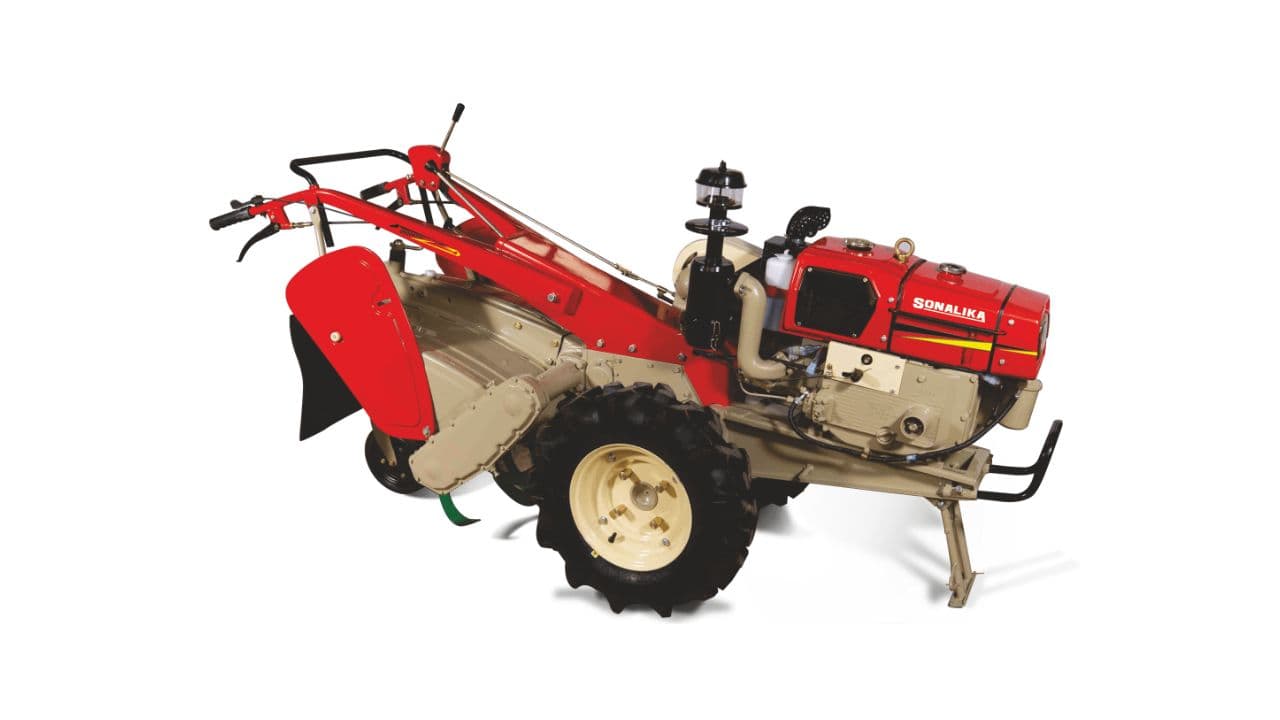
Most conversations about farm machinery testing in India stay abstract — "FMTTI testing is required," "budget for it," "it gates your subsidy eligibility." Fewer conversations put an actual rupee figure on the table. SRFMTTI Garladinne just did, in a dated, signed notification that revises power tiller testing charges with effect from 1 April 2026.
This is worth reading closely, not just for the number itself, but for what it reveals about how these fees are built up — and what it implies for the other machine classes that share the same testing ecosystem: power weeders, power reapers, and battery-operated sprayers.
The notification
SRFMTTI — one of four regional centres in the FMTTI network, located at Tractor Nagar, Garladinne, in Anantapur district, Andhra Pradesh — issued File No. 16-29/2017-Test on 25 March 2026, titled "Revised Testing Charges w.e.f. 01.04.2026." It updates the fee schedule for mandatory tests under the "New Regime of Testing of Power Tiller (ICT/Batch)," per the Ministry's Office Order No. 13-17/2021-M&T(I&P) (FTS-98794) dated 2 April 2024.
The test-by-test breakdown
The fee is not one lump charge — it's built from thirteen individually priced test components, and the spread is instructive for anyone budgeting a testing programme for the first time.
| Test | Revised fee (₹) |
|---|---|
| Specification – Initial Inspection | 22,693.48 |
| Running-in for 20 hours | 76,887.92 |
| Rotary Performance Test | 23,562.45 |
| Brake Performance Test | 5,338.61 |
| Drawbar Performance Test | 25,579.15 |
| Noise Level Test | 9,066.43 |
| Turning Ability Test | 3,442.05 |
| Nominal Speed Test | 3,661.33 |
| Haulage Test | 17,517.00 |
| Field Test | 1,09,234.53 |
| Torture Test | 7,229.35 |
| Material Test & Chemical Composition | 9,734.77 |
| Miscellaneous Charges | 93,531.28 |
| **Total (with running-in)** | **4,07,478** |
Two lines dominate the total. The Field Test at ₹1,09,234.53 is the single largest component — unsurprising, since it's the most resource- and time-intensive part of any performance evaluation. Miscellaneous charges at ₹93,531.28 is the line first-time applicants most often underbudget, because it doesn't map to a specific, named activity the way "Brake Performance Test" does. Running-in, at ₹76,887.92, is the third-largest line and the one you can strip out entirely if the without-running-in fee path applies to your programme.
What "exclusive of GST" actually means in cash terms
The notification is explicit that all fees are exclusive of GST, and that SRFMTTI's testing activity has been classified — per a 2017 letter from the Office of the Assistant Commissioner of Central Tax, GST Division, Anantapur — under "Technical Testing and Analysis Service," Chapter/SAC 998346, attracting GST at 18% of the test fee.
Run the arithmetic and the real outlay for a full power tiller test programme is closer to ₹4,80,824 (with running-in) or ₹3,90,096 (without), not the headline ₹4,07,478 or ₹3,30,590. Budgeting off the pre-GST figure is a common and entirely avoidable first-time mistake.
What this signals for power weeder, power reaper, and battery sprayer testing fees
This specific schedule is for power tillers under IS 9935, at one of the four FMTTI centres. It is not a universal price list — but the structure it reveals generalises across the categories that share this testing ecosystem, and that's the useful takeaway for OEMs working across a broader small-farm mechanization range.
For an OEM planning a coordinated range — a power tiller, a power weeder, and a battery sprayer launching together, say — the practical move is to request the current, machine-specific fee schedule from the target centre for each product early, rather than assuming any one schedule (even this fully documented power tiller one) applies across the range.
Where AgPro fits
Reading a fee notification correctly — which lines are negotiable in scope, which are fixed government charges, how GST and the biannual revision clause change a multi-quarter budget — is a small thing that compounds into real planning accuracy across a testing programme. AgPro's regulatory practice works this fee-and-timeline layer alongside the technical testing itself, for power tillers, weeders, reapers, sprayers, and the tractors that sit next to them in a mechanization range.
For the fuller technical picture of what gets tested and why — test codes, the four-centre network, and realistic calendars — see our guide to FMTTI testing of power tillers, power weeders, and power reapers, and for how this sits alongside BIS certification, our BIS certification guide.
Explore our regulatory & homologation service →Quick answers.
- At SRFMTTI Garladinne, the revised schedule effective 1 April 2026 sets the full mandatory test fee — with the 20-hour running-in included — at ₹4,07,478, exclusive of GST. Without running-in, the fee is ₹3,30,590. These are the charges for one notified southern-region centre; the four FMTTI centres set fees independently and revise them on their own cycles.
- Yes. SRFMTTI's testing activity is classified under 'Technical Testing and Analysis Service' (Chapter/SAC 998346) and GST applies at 18% of the test fee, charged separately from the fee itself. Budget the fee plus 18% as your real cash outlay, not the headline fee alone.
- Not necessarily. Each machine class runs a different combination of mandatory tests, so the line-item mix — and the total — differs even at the same centre. A power tiller's schedule is weighted heavily by its Field Test and Miscellaneous charges; a weeder's or reaper's schedule reflects its own test code instead. Always request the current test-wise fee schedule for the specific machine class from your target centre rather than assuming parity with tiller charges.
- Battery-operated and power-operated sprayers are evaluated under their own applicable test procedure — separate from IS 9935 (power tillers) — and carry their own fee schedule at the relevant testing centre. The cost logic is the same as this notification demonstrates for power tillers: a specification/inspection charge, performance-test charges specific to the machine, and a miscellaneous-charges line, all exclusive of GST. Confirm the current sprayer-specific schedule directly with the centre before budgeting.
- This notification states testing fees/charges are revised biannually at 8%, under the Ministry's Office Order No. 13-17/2021-M&T(I&P) (FTS-98794) dated 02.04.2024. Treat any fee schedule you're quoted as time-boxed — confirm you're working from the current revision before finalising a testing budget, especially for programmes that span more than one revision cycle.
- Per SRFMTTI's notice, testing charges are paid online through the NTRP portal (www.bharatkosh.gov.in), the Government of India's non-tax receipt portal. Centres typically provide a step-by-step payment procedure alongside the fee schedule; confirm the correct head of account and challan process with the centre before initiating payment, since a misrouted payment can delay sample acceptance.
- SRFMTTI's schedule shows a fee both with and without the 20-hour running-in component (₹4,07,478 versus ₹3,30,590), so the option exists on paper. Whether skipping running-in is acceptable depends on the applicable test regime for your specific model and the centre's requirements — this is a technical eligibility question, not just a cost one, and should be confirmed with the centre before assuming the lower figure applies to your programme.

Devendra K Jha· Director, AgPro Consulting
Founding Director of AgPro Consulting. Agricultural engineer with 28+ years across agri inputs, mechanization, and enterprise leadership roles.
LinkedInRelated insights
What Is the Validity of FMTTI Certification? The Full Category-Wise Table
FMTTI test reports aren't valid forever. Since a 2018 Ministry Office Memorandum, every machine category tested at FMTTIs carries a fixed validity period — 3 to 7 years for the initial test report, 5 years for each subsequent batch report — after which the manufacturer must retest if the model continues unchanged. Here's the full category-wise table, covering power tillers, power weeders, power reapers, and battery sprayers.
What Is FMTTI Certification? Meaning, Process, Cost & Timeline Explained
FMTTI certification is the common name for a performance test report issued by one of India's four Farm Machinery Training & Testing Institutes. It isn't a product-conformity mark like BIS — it's the document that gates SMAM subsidy and dealer-channel sales for tractors, power tillers, power weeders, power reapers, and sprayers. Here's what it actually is, who runs it, what it costs, and how long it takes.
The Latest Applicable Farm Machinery Testing Fee Across Every FMTTI & FMTC (FY 2025-26)
The Ministry of Agriculture's Mechanization & Technology Division has set the currently applicable testing fee for every category tested at FMTTIs and FMTCs nationally — power tiller / self-propelled reaper / power weeder testing under one ₹1,21,961 bracket, and battery sprayer testing priced separately from power-operated sprayer testing. Here's the full schedule and what it means for budgeting.